

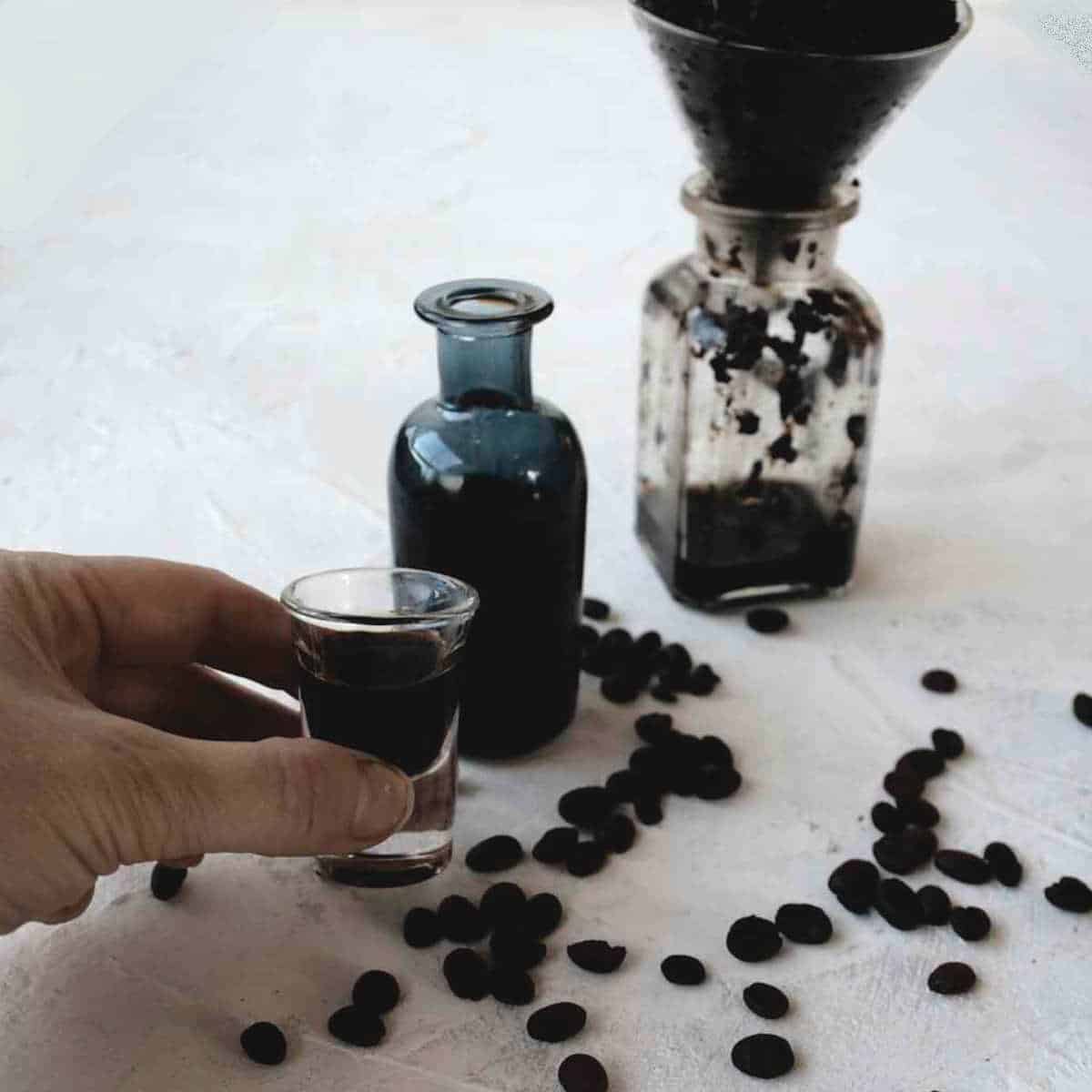
Just a few drops of this aromatic and homemade coffee extract add specific rich coffee flavor and medicinal properties to your baking, cooking, and even your skincare beauty products. This simple coffee essence made of two ingredients is a great way to add coffee flavoring to any homemade dish.
Whether you are a coffee lover or not, you will appreciate this tiny bottle of coffee essence in your hand that can turn a bland cake into coffeelicious sensation.
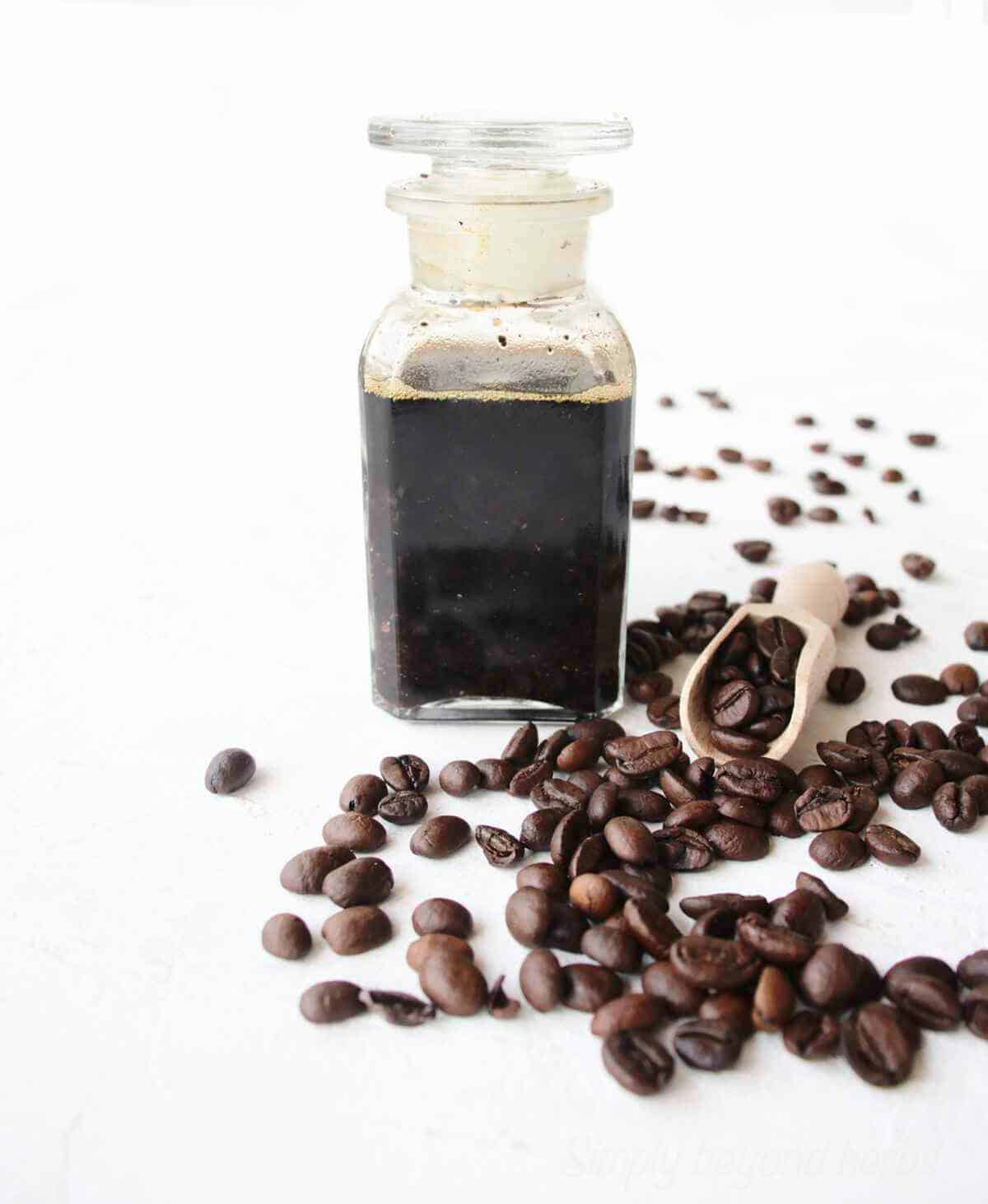
What is a coffee extract?
Coffee extract is a concentrated coffee flavoring made of roasted coffee beans and alcohol. Herbalists call it a tincture; some people may know it as coffee essence.
Coffee extract captures coffee beans’ taste, aroma, and medicinal properties in a tiny bottle. It makes an excellent addition to Coffee Cupcakes or other sweet or savory dishes. Moreover, it can last for years if stored properly.
This highly concentrated coffee flavor essence is easy to keep on hand, unlike ground coffee or beans, which rapidly lose their potency.
Ingredients
You can make coffee extract at home. All you need to make a potent flavor of coffee is aromatic roasted coffee beans and alcohol. No special equipment or skills are required
Whole Coffee beans
The perfect cup of coffee starts with fresh, delicious coffee beans. The same rule applies when you make your own extract.
If you want your tincture to be strong and full of flavors, make sure you select aromatic coffee beans that are fresh and organic. So look for beans that have a printed roast date on them. Ideally, look to use beans for up to four weeks.
Similarly, you can use cocoa or vanilla beans to make cocoa extract or vanilla extract full of flavors.
Alcohol
you can use ethanol (synonyms: ethyl alcohol or grain spirit) that is available in a pharmacy or vodka, rum or brandy. However, to extract the best coffee flavor, use mild-tasting alcohol that will not interfere with the coffee flavor.
I prefer vodka for its neutral taste and color.
40-50% alcohol is equal to 80-90 proof – these are standard concentrations for making extracts or tinctures.
How to make coffee extract at home
First step
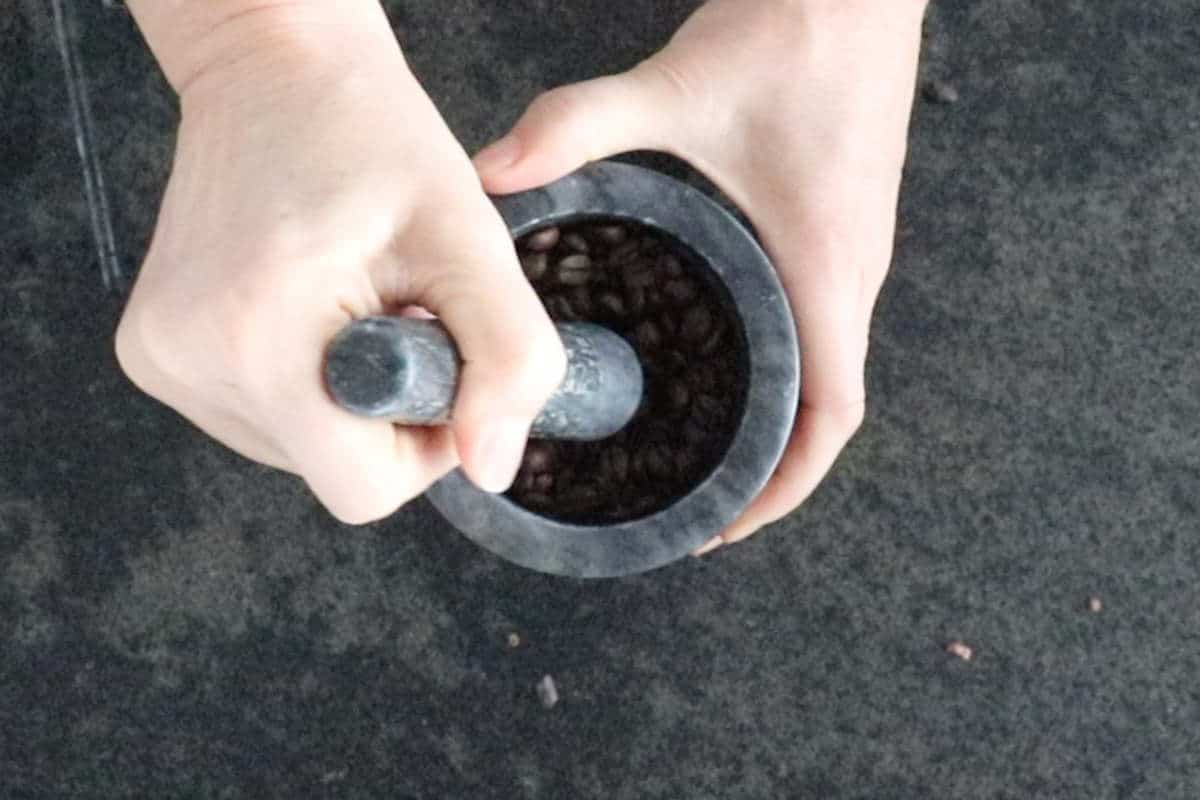
Use a mortar and pestle to crack the coffee beans. You simply need to open the coffee beans so they can release their coffee flavor. Alternatively, use a food processor or coffee grinder, but you will need just a few pulses to achieve the desired result.
A plastic bag and hammer or rolling pin will also do.
Second step
Add the cracked coffee beans into a sterilized jar with a plastic lid. Cover them with the alcohol of your choice, and shake them well. Close the jar with a plastic lid or use parchment paper between the metal lid and the jar to avoid any corrosion.
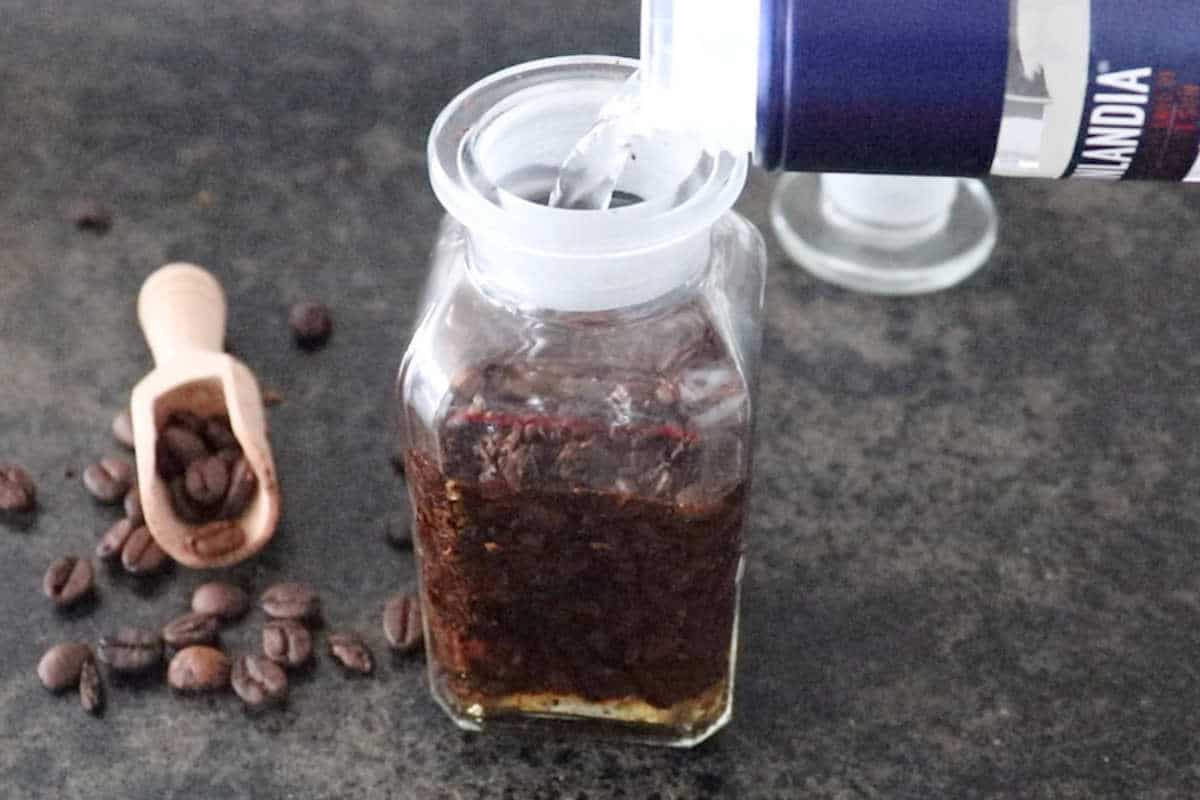
Third step
Let the mixture infuse for a week in a cold, dark place, shaking occasionally. We need the solvent, alcohol, to extract all the flavors and oils from the beans. You can check in a few days if you like the taste of the extract. Keeping the extraction process longer will result in a strong and bitter coffee tincture which is not what we want. It depends on the strength of the coffee beans and on the concentration of the extract. More is not better in this case.
You can speed up the extraction process by grinding the beans into powder. Higher concentration of beans versus alcohol or increase the frequency of shaking.
Fourth step
Strain the mixture.
Pour the mixture through a fine mesh sieve, cheesecloth, or coffee filter to remove the beans and keep the concentrated liquid.

Use dark dropper bottles to store it. Don’t forget to label it with the date you made it. This Extract enjoys a long shelf life of 3-4 years if stored at room temperature, as alcohol is a great preserving agent.
You can choose to make a coffee extract with or without alcohol. to make a potent coffee extract without alcohol, you can use 3 parts of food-grade liquid glycerin and one part of water instead of alcohol.
This essence is made of coffee beans and alcohol and contains caffeine as well as other components such as oils.
Coffee essence substitute
If you don’t have time or alcohol at your hand, there is an even easier and faster way to get a coffee essence which is not technically a coffee extract but a pretty close coffee essence substitute.
Coffee beans are water soluble; thus, you can make the best coffee extract substitute by extracting roasted coffee beans in water for an extended period. It is called coffee concentrate, which makes an intense and very concentrated brew. The coffee concentrate is often used to make cold or iced coffee; however, can also substitute coffee extract to add a typical coffee flavor and aroma.
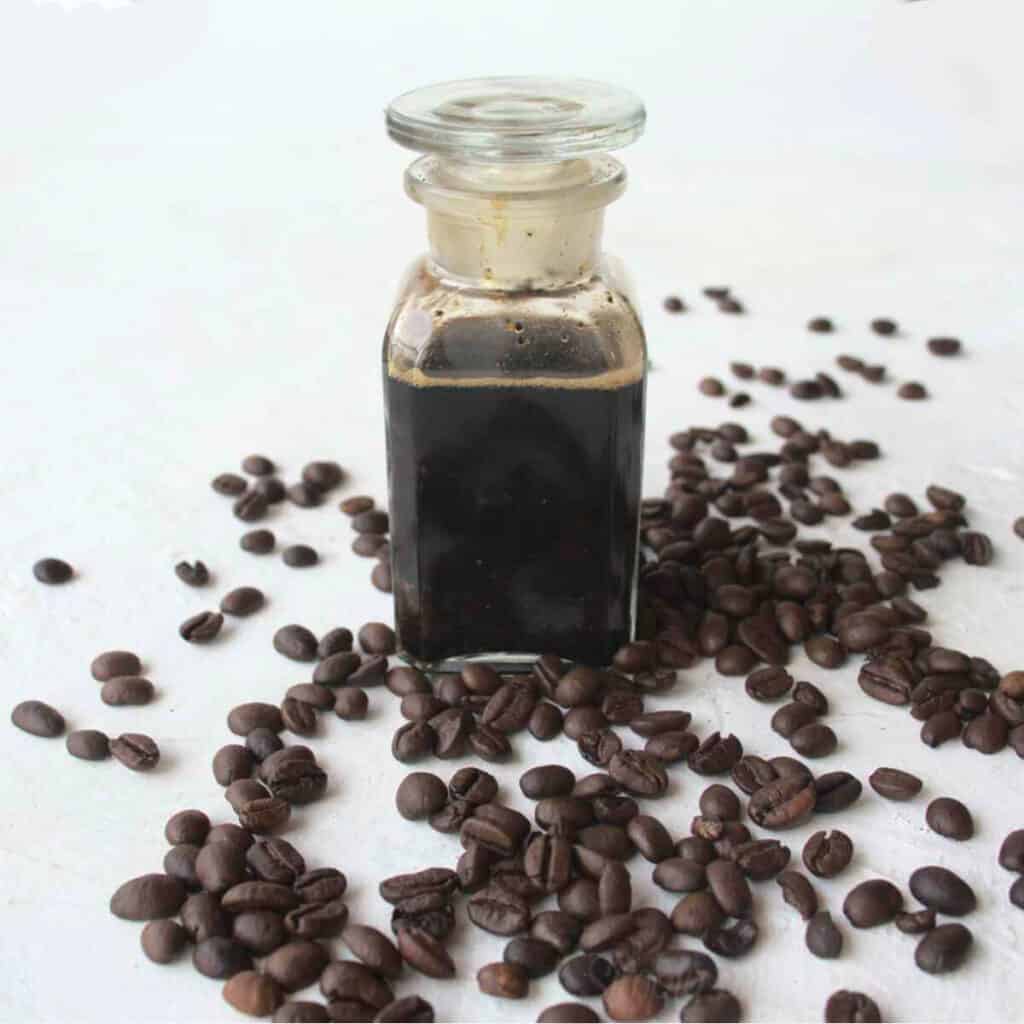
How to make coffee concentrate
Grind the coffee in a coffee grinder to make it the size of sea salt. Use a ratio of one part of coffee to four parts of water. Transfer the coarse coffee into a clean jar and pour over clean cold water. Mix it well and make sure the coffee is completely saturated. Cover the mixture and let it brew for 24 hours.
Strain the mixture using a cheesecloth or a coffee filter and use just pure coffee concentrate. Keep it in an airtight container in the refrigerator for 1-2 weeks.
To speed up the extraction process, you can use hot water instead of cold. Alternatively, very strong, freshly brewed coffee or instant coffee instead.
To make one cup of hot coffee, mix one tablespoon of this coffee concentrate with one cup of hot water.
The main difference between a concentrate and a regular cup of coffee is the ratio of coffee to water. A typical coffee recipe uses 25 grams of coffee for 400 ml of water, thus a 1:16 ratio of coffee to water, while a Concentrate recipe might use a 1:4 ratio of coffee to water.
Coffee extract uses and recipes
how to use the coffee extract in recipes
This full-bodied extract is a concentrated liquid that will enhance any desserts, like these Coffee Cookies or non-alcoholic drinks (tea, smoothies) that taste like coffee. You can also use in alcoholic cocktails like this Baileys White Russian. This Coffee extract and coffee concentrate can replace vanilla extract in baked goods for those who don’t like the taste of vanilla.
In addition, pure coffee extract can also add serious flavor to savory dishes such as fish.
This concentrated liquid made of two ingredients makes a great replacement for espresso powder in all your sweet or savory recipes.
In skincare
While coffee is most widely used to boost your energy, it’s also gaining a reputation as a remedy for the skin thanks to its antioxidant content.
The Caffeine that is present in the coffee may help reduce the appearance of cellulite – thus, this DIY coffee scrub may come in handy.
Known for its stimulating effect when applied internally, coffee extract acts the opposite when applied topically due to the antioxidants present in the coffee.
Add few drops of this coffee extract recipe to a bath or bath bombs to calm and relax.
Coffee extract may help with dark circles under the eyes as it helps dilate blood vessels that contribute to dark circles as per Beverly Hills MD Cosmeceuticals. Try this recipe in facial creams.
coffee has both anti-inflammatory and antibacterial properties thus helping to fight acne. Use coffee extract in this acne mask or Coffee and cream soap

How to make coffee extract

Just a few drops of this aromatic and homemade coffee extract add specific rich coffee flavor and medicinal properties to your baking, cooking, and even your skincare beauty products.
Ingredients
- 1/4 cup (22 g) coffee beans
- 1 cup (240 ml) alcohol
Instructions
- Use a mortar and pestle to crack the coffee beans. You simply need to open the coffee beans so they can release their coffee flavor. Alternatively, use a food processor or coffee grinder, but you will need just a few pulses to achieve the desired result. A plastic bag and hammer or rolling pin will also do.
- Add the cracked coffee beans into a sterilized jar with a plastic lid. Cover them with the alcohol of your choice, and shake them well. Close the jar with a plastic lid or use parchment paper between the metal lid and the jar to avoid any corrosion.
- Let the mixture infuse for a week in a cold, dark place, shaking occasionally. We need the solvent, alcohol, to extract all the flavors and oils from the beans. You can check in a few days if you like the taste of the extract. Keeping the extraction process longer will result in a strong and bitter coffee tincture which is not what we want. It depends on the strength of the coffee beans and on the concentration of the extract. More is not better in this case.
- You can speed up the extraction process by grinding the beans into powder. Higher concentration of beans versus alcohol or increase the frequency of shaking.
- Strain the mixture. Pour the mixture through a fine mesh sieve, cheesecloth, or coffee filter to remove the beans and keep the concentrated liquid.
Notes
You can speed up the extraction process by grinding the beans into a powder. Higher concentration of beans versus alcohol or increase the frequency of shaking.
Recommended Products
As an Amazon Associate and member of other affiliate programs, I earn from qualifying purchases.


Nutrition Information:
Yield:
10Serving Size:
1Amount Per Serving: Calories: 6Total Fat: 0gSaturated Fat: 0gTrans Fat: 0gUnsaturated Fat: 0gCholesterol: 0mgSodium: 22mgCarbohydrates: 1gFiber: 0gSugar: 1gProtein: 0g
Fermented Drinks & Herbal Wines

This rich Herbal fire-cider packed with antioxidants, minerals and vitamin C is an alcohol-free way to boost your immune system with nutrient-rich herbs, fruits and roots and warm up your body.

Join me in an adventure to turn rose-scented rosehips into fragrant wine. It’s a delicious way to use and preserve rose hips for year-round enjoyment.

Dandelion bitter stimulates the digestive system, helps to lower your level of blood sugar and has a positive effect on stress. From mild digestions to heartburn, bitters increase digestibility and help you calm an upset stomach.

This floral and fruity elderflower cider makes it a uniquely refreshing drink. In addition, it is a creative way of preserving apples.

Homemade kiwi wine is far from the sweet fruit-based wines you buy in the liquor store. This fruity wine is a crisp yellow wine full of tropical flavor with a touch of tart berries. It is a vibrant beverage that adds a unique flair to your wine cellar.

Pine Needle Soda is a fizzy soda made with 3 ingredients. Also called pine needle Sprite, this soda recipe is a foraged and fermented drink with a distinct citrusy pine needle taste.

Learn the traditional way of herbal infusion by macerating the primrose flowers in wine. This simple extraction method will allow you to enjoy a delicious and flowery taste of primrose wine as well as its medicinal benefits.

This pear wine recipe makes a light, refreshing wine that adds a unique flair to your wine cellar. It is also an easy way to preserve and enjoy the flavor of ripe pears all year long.

These fermented cherry tomatoes can be an easy way to preserve and pack tomatoes with probiotics that burst in your mouth with refreshing flavors.

These fermented bananas are sweet with a subtle tang. Packed with probiotics, they are an easy way to sneak beneficial bacteria into your smoothies or banana bread.

These fermented apples are sweet and slightly tangy. They are probiotics-rich and the perfect way to sneak probiotics into smoothies or cakes.





This was a genius idea! I never thought to make coffee extract but when I did I added it to my brownies and it brought out an amazing flavor!
I can’t wait to try this recipe. I love the step-by-step instructions. You make trying new things easy! Thanks!
Love the extract! Once you strain it what do you do with the leftover coffee beans?
Hi Karen, you can make a DIY coffee scrub. https://simplybeyondherbs.com/diy-coffee-body-scrub/ or compost them.