Learn how to identify, harvest, and use spruce tips. Discover edible conifer tips, their citrus flavor, and ways to use them in recipes like syrup and tea.
Fresh light green needles at the tips of spruce branches are among the most exciting wild foods to discover in spring. These tender shoots, known as spruce tips, are packed with bright citrus flavor and can be used in both sweet and savory dishes.
Foragers have harvested spruce tips for centuries, not only for their refreshing taste but also for their traditional herbal uses. The young tips can be eaten raw, brewed into Spruce tip tea for vitamin C and wellness, or preserved in the form of spruce tip syrup, tincture, oil, sugar, or jelly.
Because spruce tips appear for only a short time each year, many people enjoy foraging them during the spring months and preserving them for later use.

What Are Spruce Tips?
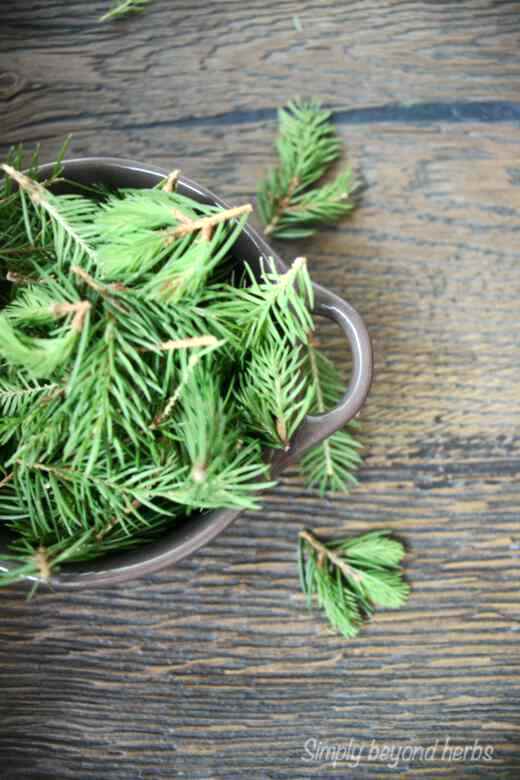
Spruce tips are the young growing tips of spruce trees, appearing at the ends of branches as new growth each spring. At first, they are soft, bright green, and covered in a delicate papery sheath.
During this stage, the tips are tender and pleasantly citrusy. As they mature, they gradually harden and develop into the sharp spruce needles typical of the tree.
Fresh spruce tips have a unique taste that many people describe as lemony, slightly resinous, and piney. Because of this flavor, they work beautifully in both sweet and savory dishes, from herbal teas and syrups to baked goods and desserts like spruce tip ice cream or shortbread cookies.
Young spruce tips are also high in vitamin C, which historically made them valuable in traditional remedies and forest foods.
How to Identify Spruce Trees
Spruce trees belong to the Picea genus, part of the Pinaceae family of conifer trees. If the tree stands alone, it often has the classic symmetrical Christmas tree shape.
The easiest way to identify a spruce tree is by examining its needles.
Spruce needles:
- grow individually from the branch
- are short and stiff
- have a square shape that can be rolled between your fingers
This is different from pine trees, where long pine needles grow in clusters from a single point.
Another important detail is that spruce needles attach to small woody pegs along the branch. When the needles fall off, these pegs remain, giving the twig a rough texture.
Common spruce species used for foraging include:
All of these produce edible young tips.
If you are new to foraging, using a guide to identifying conifer trees is always recommended before harvesting.

Are All Spruce Tips Edible?
Yes. The young tips of all spruce species are edible, though their flavor can vary slightly depending on the tree.
Most spruce tips have a bright citrus taste, while some may be more resinous or piney.
The tender tips can be eaten raw, added to salads, or used to make syrups, teas, and other recipes.
However, proper identification is essential. Some conifer trees, such as yew, are toxic and should never be harvested for food.
When in doubt, always double-check the species before foraging.
When to Harvest Spruce Tips
The best time to harvest spruce tips is during the spring months, when the tree produces fresh new growth.
At this stage, the tips are:
- bright green
- soft and flexible
- still covered with a papery sheath
This short window is known as spruce tip season, and it usually lasts only a few weeks depending on the climate.
Once the needles fully open and harden, the tips become too tough and lose their delicate flavor.
How to Harvest Spruce Tips Sustainably
When foraging spruce tips, it is important to harvest responsibly.
The best practice is to gently pinch off only a few tips from each branch. Taking too many tips from one tree can slow its growth.
I usually collect just a handful of fresh spruce tips from several trees instead of harvesting heavily from one.
Choose mature trees and avoid young trees that are still establishing themselves.
It is also important to forage in areas away from busy roads or polluted environments, since trees can absorb contaminants.
Responsible harvesting allows the tree to continue growing while providing a sustainable harvest each spring.

What Do Spruce Tips Taste Like?
Spruce tips have a surprisingly bright flavor. Most people describe them as citrusy with subtle pine notes, sometimes resembling lemon or grapefruit.
The taste can vary depending on the spruce species, but in general they have a refreshing forest aroma that works beautifully in cooking.
Their citrus-like flavor pairs well with:
- honey
- sugar
- lemon juice
- butter
- herbs
Because of this balance between citrus and resinous notes, spruce tips work well in both sweet and savory dishes.
Spruce Tips Benefits
Spruce tips have long been valued in traditional herbal preparations.
They are naturally high in vitamin C, which helps support the immune system and protect against seasonal illness.
Spruce tips also contain aromatic compounds such as terpenes, which give them their characteristic citrus scent.
Traditionally, spruce tips have been used to:
- soothe coughs
- support respiratory health
- ease chest congestion
These properties are commonly used in preparations such as spruce tip tea or spruce tip syrup.

Other Edible Conifer Tips
Spruce is not the only conifer tree with edible young shoots.
Several other trees also produce flavorful tips that can be harvested during the spring.
Fir Tips
Fir tips are soft, sweet, and slightly citrusy. Many foragers find them easier to harvest because the needles are softer than spruce.
Fir trees have:
- flat, soft needles
- needles attached with a small suction-cup base
- a pale underside to the needles
Common edible species include balsam fir.
Pine Tips
Pine trees are easy to recognize because their pine needles grow in clusters from a single point.
The young pine tips are aromatic and can also be used in teas, syrups, and herbal preparations.
Together with spruce and fir, they form a group of edible conifer tips that many people enjoy foraging each spring.
Ways to Use Spruce Tips
There are many creative ways to use spruce tips in cooking and herbal preparations.
Some popular uses include:
- spruce tip syrup
- spruce tip tea
- spruce tip tincture
- Spruce Tip Jelly
- Spruce Tip Honey
- Spruce Tip Ice Cream
- Spruce Tip Vinegar
- spruce tip salt
- Citrus Spruce Tip Salad
- Easy Spruce Tip Marmalade
- Potatoes with Spruce Tips & Cream
- Spruce Tip Chicken Thighs
- Spruce Soda
Fresh spruce tips can be used immediately or preserved for later, check this Freezing Spruce Tips.