

Learn an easy way to make vanilla infused oil at home and discover three versatile ways to use it in baking, skincare, and as fragrance for candles and perfume.
I have been experimenting with vanilla beans lately and have made various recipes, from vanilla bean paste, vanilla syrup, liqueur, to vanilla sugar.
This vanilla oil is the newest addition to my vanilla series, extending the magic of vanilla beyond the kitchen into skincare, perfume, and more.

What is Vanilla Infused Oil?
Vanilla infused oil is simply a carrier oil that has been slowly steeped with vanilla beans, allowing the oil to absorb the rich aroma and subtle flavor of vanilla. You can use various carrier oils such as jojoba oil, almond oil, or grapeseed oil, depending on your intended use.
What is the Difference Between Infused Oil and Vanilla Essential Oil?
While both bring a sweet vanilla scent, they are made differently. Vanilla essential oil (or vanilla absolute) is produced through solvent extraction or CO₂ extraction. It results in a concentrated substance that is often diluted before use in perfumes and skin care. Unlike vanilla essential oil or vanilla oleoresin, an infused oil is gentler, easier to make at home, and retains a soft, earthy aroma.
Ingredients to make vanilla oil?
Whole vanilla beans (organic vanilla if possible)
Avoid fresh/soft beans for oil infusion. Fresh beans have higher moisture content, which can cause spoilage or mold in your infused oil. Instead, choose dry but still pliable beans, not brittle. See the notes in the recipe card.
You can use any variety: Madagascar Bourbon beans for a deep, sweet, classic vanilla scent; Tahitian beans for a floral, fruity aroma; or Ugandan beans for a bold, chocolatey-vanilla note.
Use both the caviar and the pod — the seeds intensify the vanilla aroma and give the oil visible flecks that look artisanal.

Carrier Oil
For baking: grapeseed, sunflower, or light olive oil.
For skincare and fragrance: jojoba oil or sweet almond oil.
Always choose cold-pressed, food-grade oils for the best aroma and shelf life.
Sterilized jar with lid
Glass jars are best, ideally dark amber to protect the oil from light.
How to make vanilla oil?
First step: Prepare the beans
Slice the vanilla bean lengthwise to expose the seeds. Scrape the seeds out with the back of a knife and cut the vanilla bean into small pieces.

Second step: Fill the jar
Place the vanilla seeds and vanilla pieces into the sterilized jar. Small pieces infuse faster and release more vanilla scent into the oil.
Pour the oil over the beans until fully covered. Make sure there are no air pockets.

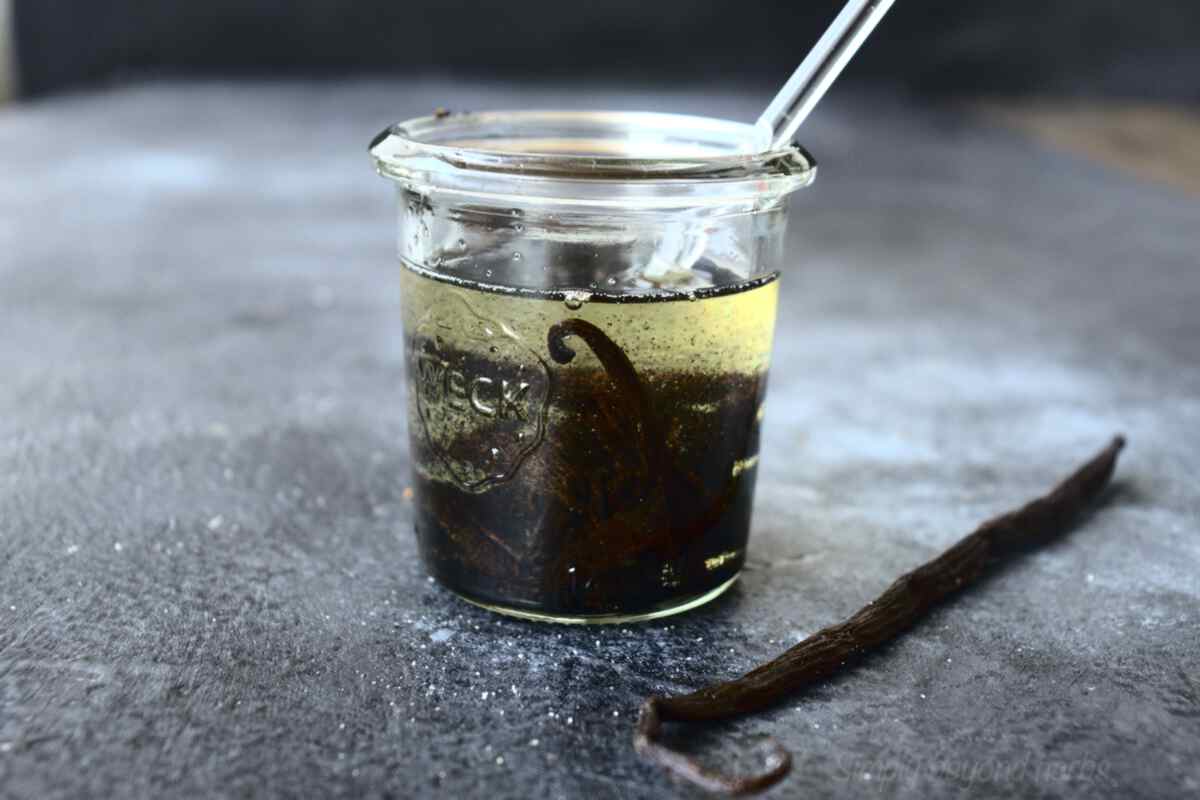
Third Step: Infuse
Seal with a lid and place the jar in a cool, dark place. Let it sit for 4–6 weeks, shaking gently every few days to keep the oil infusion even.
Fourth Step: Strain
Once infused, strain the oil through cheesecloth to remove the vanilla pieces and seeds. Store the finished product in a clean, dark glass bottle.
Shelf life: Stored correctly, your infused vanilla oil can last longer than 6 months — up to a year for some carrier oils.

Ways to use vanilla-infused oil in Baking
You can use this homemade vanilla oil in place of butter in cake and cookie recipes for a subtle vanilla aroma. Just like vanilla extract, drizzle over pancakes, whisk into salad dressings, or brush over baked goods for a delicate vanilla scent and taste.
in Skincare like vanilla body oil
To make vanilla body oil, follow the base recipe using jojoba oil or almond oil. They both are skin-friendly, absorb well, and have a longer shelf life. Once strained, use the oil after a shower to lock in moisture, add a few drops to lotion, scrub or blend with cocoa butter for a richer body product. You can also use it as a base to make simple vanilla lip balm. Vanilla’s aroma pairs beautifully with other fragrances such as geranium, patchouli, or benzoin.
Use Vanilla scent in Perfumery
When making oil with vanilla scent make vanilla infused jojoba oil as your carrier. It has a neutral scent and excellent stability, which helps perfume blends last longer.
Follow the base recipe, then once strained, blend the infused vanilla oil with other aromatic ingredients to create your own perfume. For a warm, cozy scent, combine it with peru balsam or patchouli. For something floral, try geranium or rose absolute.

You can also use the oil to scent homemade soaps, candles, and other care products. If making a vanilla perfume, pour the oil into an apothecary-style bottle for a finished product that looks as beautiful as it smells.
How to store Vanilla Infused Oil
Store your infused oil in a cool, dark spot, ideally in amber glass bottles with a tight lid. Edible vanilla oil can be refrigerated to prolong freshness, while body and fragrance oils do well in dark cupboards.
For the best shelf life, sterilize all jars and utensils before starting, and avoid introducing water into the oil. Properly stored, vanilla infused oil can last 6 months to a year.
Can you speed up the infusion process?
You can speed up the process with a warm infusion method by placing your sliced vanilla beans (pods and caviar) and carrier oil in a sterilized jar, then setting it in a double boiler or slow cooker on the low heat (around 40–50 °C / 104–122 °F) for 4–8 hours, swirling occasionally; this gentle heat helps release the vanilla aroma faster without damaging the oil
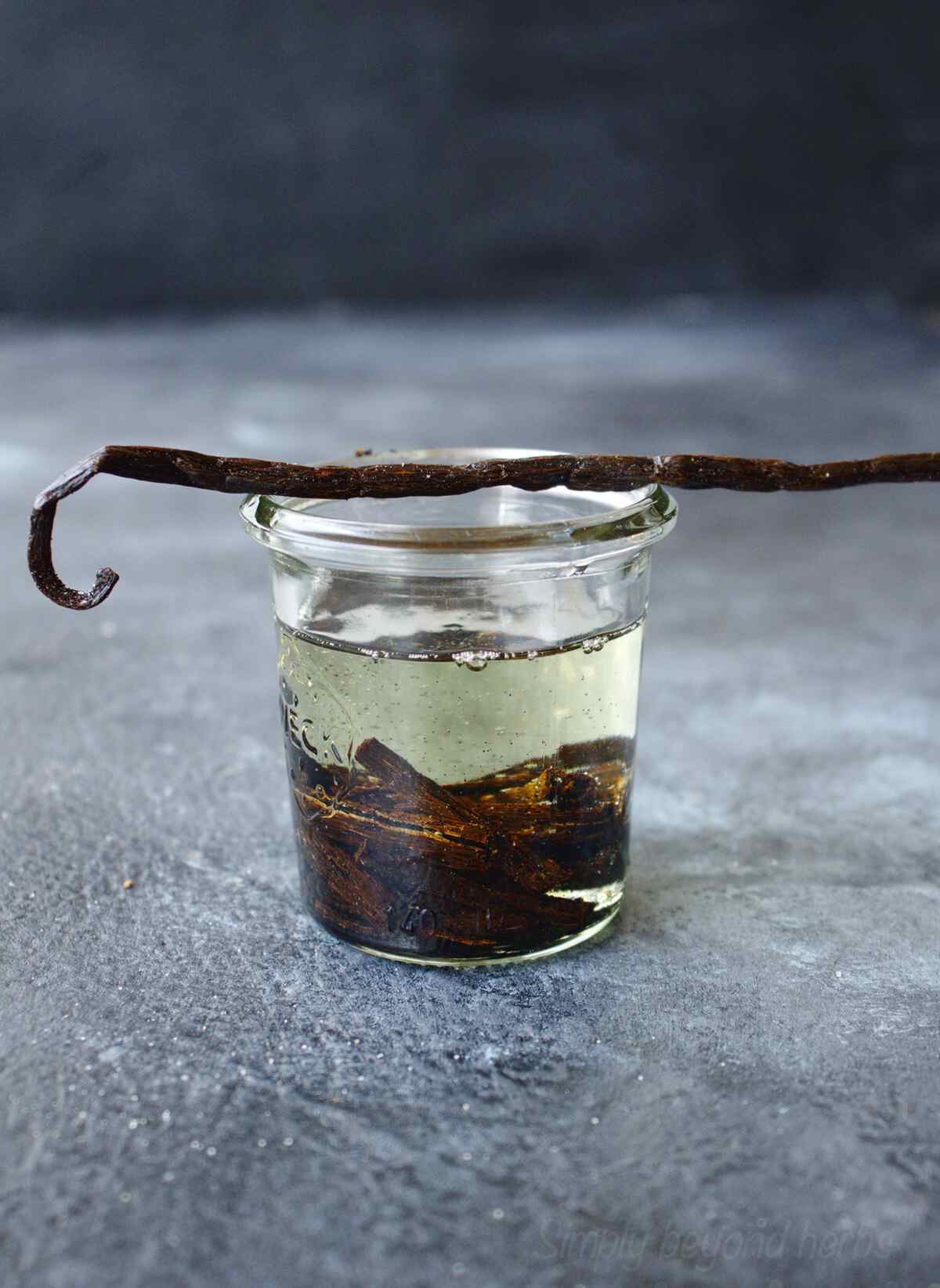
Tips to make the best Infusion:
Try Charring Your Beans for a Deeper Aroma – For a bold, smoky note, lightly char your whole vanilla beans before slicing and infusing. Hold each bean over a gas flame for a few seconds or sear it briefly in a dry cast-iron skillet until fragrant. Charring caramelizes the natural sugars, giving your vanilla-infused oil a richer, more complex scent — perfect for baking, gourmet desserts, or warm, earthy perfume blends.
Reuse pods – You can reuse vanilla pods to start the new batch, but the aroma will be lighter.
Strain the oil – while the whole vanilla bean pods infused in oil looks great when giving it as a gift or on your kitchen counter, I suggest straining it through cheesecloth to avoid mold or sediment in the oil.

How to Make Vanilla Infused Oil + 3 Ways to Use It
Learn an easy way to make vanilla-infused oil at home and discover three veratile ways to use it in baking, skincare, and as fragrance for candles and perfume.
Materials
- 2–3 whole vanilla beans - pods and caviar for
- [1 cup vegetable oil of organic quality (Jojoba Oil, Sweet Almond Oil or Olive Oil)] see notes (https://amzn.to/3swV34k)
Instructions
- Slice the vanilla bean lengthwise to expose the seeds. Scrape the seeds out with the back of a knife and cut the vanilla bean into small pieces.
- Place the vanilla seeds and vanilla pieces into the sterilized jar. Small pieces infuse faster and release more vanilla scent into the oil. Pour the oil over the beans until fully covered. Make sure there are no air pockets.
- Seal with a lid and place the jar in a cool, dark place. Let it sit for 4–6 weeks, shaking gently every few days to keep the oil infusion even.
- Once infused, strain the oil through cheesecloth to remove the vanilla pieces and seeds. Store the finished product in a clean, dark glass bottle.
Notes
How to select a carrier oil
For baking: grapeseed, sunflower, or light olive oil.
For skincare and fragrance: jojoba oil or sweet almond oil.
Always choose cold-pressed, food-grade oils for the best aroma and shelf life.
Prepare the beans
If your beans are fresh: Air-dry them for 5–7 days in a dry, shaded spot with good airflow, or use a low oven (50–60°C / 120–140°F) for 1–2 hours until leathery but not brittle. You can also briefly soak in vodka for 5–10 minutes, then let dry fully before use to reduce bacteria.
If your beans are brittle: Place them in a sealed jar with a slightly damp paper towel (not touching the beans) for 24 hours, or gently warm them in a low-humidity environment to restore pliability without adding excess moisture.




Adding Vitamin E to the mix and it’ll last even longer. Make sure you get the right Vitamin E though
Yes — adding vitamin E can help extend the shelf life, just make sure it’s tocopherol (vitamin E oil) and not a synthetic vitamin E capsule meant for supplements.